

CLIMB-IT | Virtual Cycling Fundraising Campaign
Background
WaterAid wanted to launch a new virtual fundraising event that would engage the growing cycling community while raising awareness of the impact climate change has on access to clean water.
The ambition was to create a distinctive mass participation fundraising challenge that could attract new supporters, test a new fundraising proposition and establish a scalable product for future growth.
The Challenge
The brief was to develop an entirely new fundraising product from the ground up.
Working within a Minimum Viable Product (MVP) framework, we were tasked with defining the audience, shaping the proposition, developing the campaign identity and creating an integrated communications strategy that could be tested in a live market. Success would be measured not only by registrations, but by supporter acquisition, engagement and long-term fundraising potential.
The Creative Strategy
The strongest fundraising products are built around genuine audience behaviour.
Our research identified an opportunity to engage committed recreational cyclists, people who regularly tracked rides on platforms such as Strava, Zwift and Peloton and were motivated by personal achievement as much as fundraising.
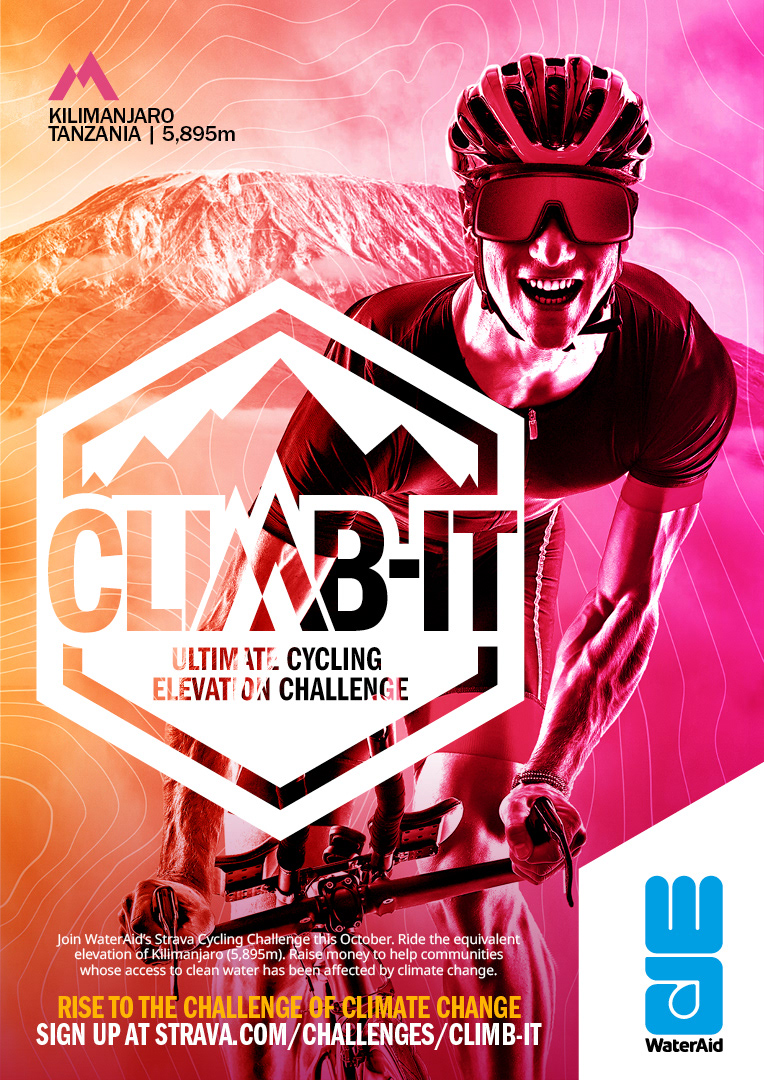
Rather than focusing on distance alone, we built the challenge around elevation. Participants climbed the equivalent height of a mountain located in one of the regions where WaterAid works, creating a direct connection between the physical challenge and the charity's mission to help communities affected by climate change.
That idea became CLIMB-IT.
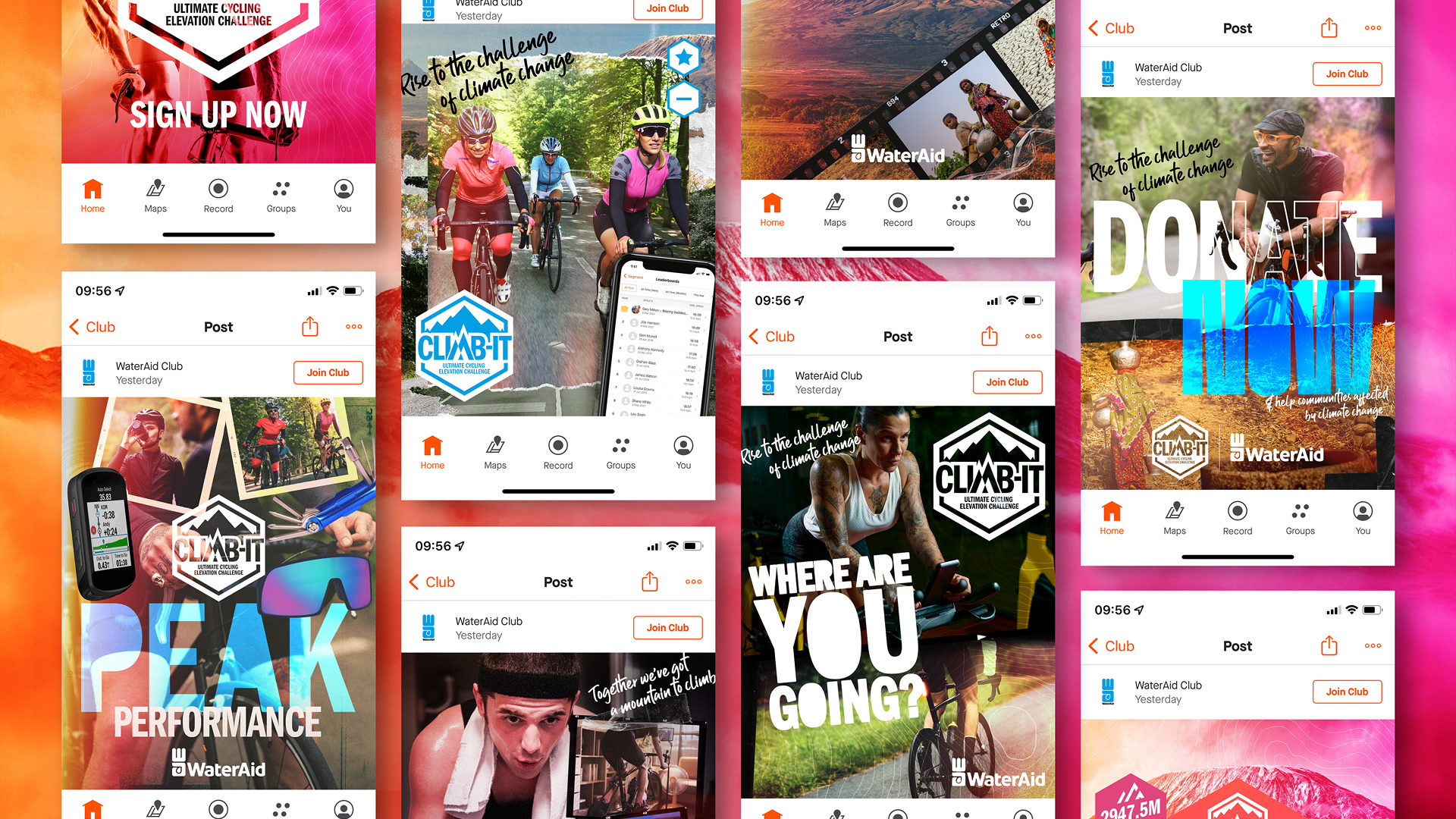
Strava became the heart of the campaign, providing both the participant experience and the primary acquisition channel. We consolidated multiple community groups into a single WaterAid Strava Club, creating a stronger sense of community while building a valuable audience for future fundraising activity.
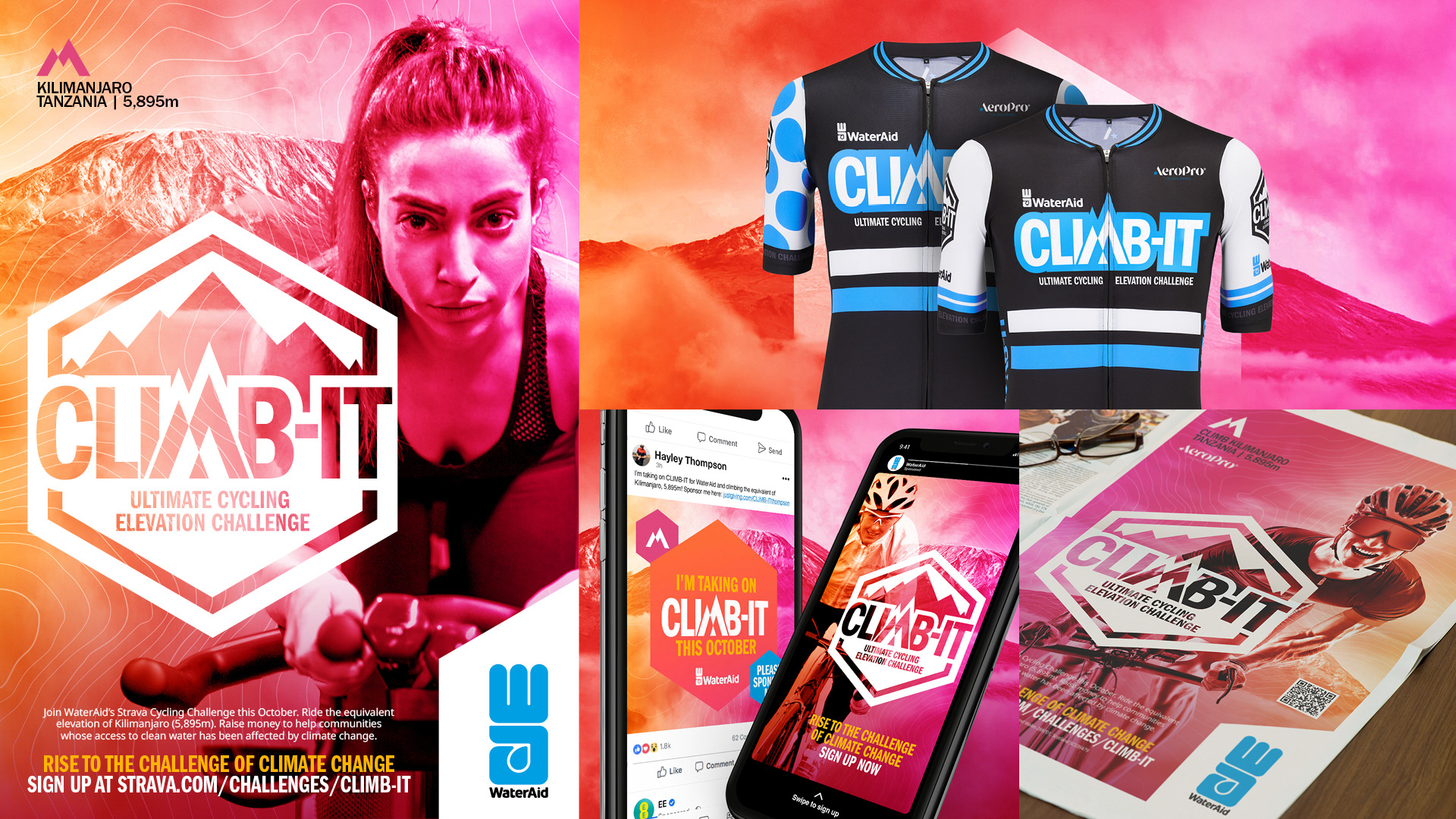
Alongside the fundraising proposition, we developed the campaign identity, communications strategy and digital toolkit, supported by influencer partnerships, social media content, participant stewardship and community management designed to maximise engagement throughout the challenge.
Impact
CLIMB-IT successfully demonstrated the potential of a new virtual fundraising product, generating valuable audience insight while building a highly engaged cycling community.
106,000 cyclists registered for the challenge.
The WaterAid Strava Club grew by 700%, creating a valuable community for future fundraising campaigns.
Paid media delivered exceptional click-through rates, while influencer partnerships generated strong engagement and campaign visibility.
26% of participants completed the challenge, demonstrating strong commitment throughout the event.
More than a successful MVP, CLIMB-IT proved how audience insight, digital innovation and creative strategy can transform an emerging trend into a scalable fundraising product with long-term potential.